Buddhism 101
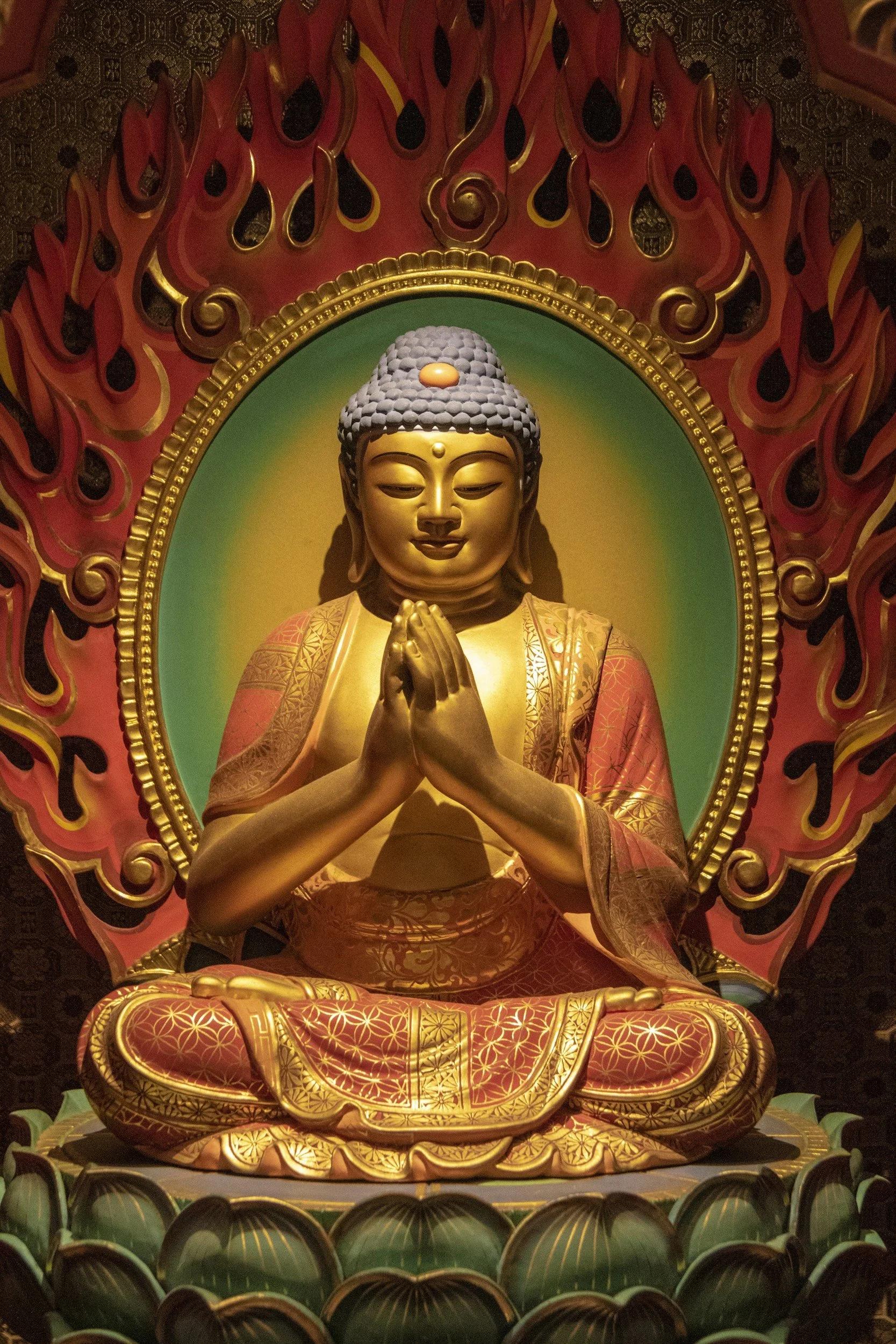
On October 28, 2025, I introduced Buddhism and Stoicism as “life systems” that people can adopt to lead their lives and that do not require belief or faith.
If you are looking for the roots of wisdom, Buddhism is the place to start.
When I first encountered Buddhism as an undergraduate studying in London, I was fascinated by Siddhartha’s (later known as the Buddha’s) tenacity.
He may have been the world’s first psychologist, determined to get to the bottom of every man’s psychic suffering, using only the tools of his own mind and the power of introspection.
We could also describe him as the most significant metaphysician of history.
Metaphysics is the study of what is real and what is not.
At bedrock, what is all of this stuff we call “reality”?
While early Western philosophers theorized that reality was all fundamentally water, fire, or atoms bouncing off one another (some with a swerve), Siddhartha proposed a radically different theory.
What Siddhartha finds at the end of his journey, underlying his mind’s impressions, beliefs, opinions, biases, and emotions, is as surprising as the end of a Frieda McFadden mystery novel.
The Great Courses offers an inexpensive series of 24 lectures, each approximately 30 minutes long, by an award-winning teacher that traces the history, principles, and evolution of the subject.
https://www.thegreatcoursesplus.com/buddhism
This is an excellent course for those who want to understand the basics of Buddhism without being overwhelmed by Eastern nomenclature.
You'll learn the astonishing story of Siddhartha Gautama - who was to become the Buddha, or “enlightened one” - the Indian prince who abandoned wife, son, and a privileged life to seek the meaning of life and death, and whose “awakening” and subsequent teachings have since impacted the world as few others have.
And you'll learn what happened after his death, as his followers began to share his teachings about the “Four Noble Truths” and the “Path” to Enlightenment. You'll see how Buddhist beliefs underwent significant and even radical change, with different varieties of Buddhism having to take shape as those beliefs spread across India, Central Asia, China, Japan, and virtually every corner of the Western world, such as becoming more respectful of one's duties to family and ancestors in China or becoming reconciled with local deities in Japan.
ALMA MATER
Harvard University
INSTITUTION
Boston University
Dr. Malcolm David Eckel is Professor of Religion and Director of the Core Curriculum at Boston University. He holds two bachelor's degrees, one in English from Harvard University and a second in Theology from Oxford University.
Professor Eckel earned his master's degree in theology at Oxford University and his Ph.D. in the Study of Comparative Religion at Harvard University.
He held teaching positions at Ohio Wesleyan University, Middlebury College in Vermont, and the Harvard Divinity School.
Course Contents
1:What is Buddhism?
2:India at the Time of the Buddha
3:The Doctrine of Reincarnation
4:The Story of the Buddha
5:All Is Suffering
6:The Path to Nirvana
7:The Buddhist Monastic Community
8:Buddhist Art and Architecture
9:Theravada Buddhism in Southeast Asia
10:Mahayana Buddhism and the Bodhisattva Ideal
11:Celestial Buddhas and Bodhisattvas
12:Emptiness
13:Buddhist Philosophy
14:Buddhist Tantra
15:The Theory and Practice of the Mandala
16:The “First Diffusion of the Dharma” in Tibet
17:The Schools of Tibetan Buddhism
18:The Dalai Lama
19:The Origins of Chinese Buddhism
20:The Classical Period of Chinese Buddhism
21:The Origins of Japanese Buddhism
22:Honen, Shinran, and Nichiren
23:Zen
24:Buddhism in America
A story with which every sage should be familiar.
Om