Cell Babel
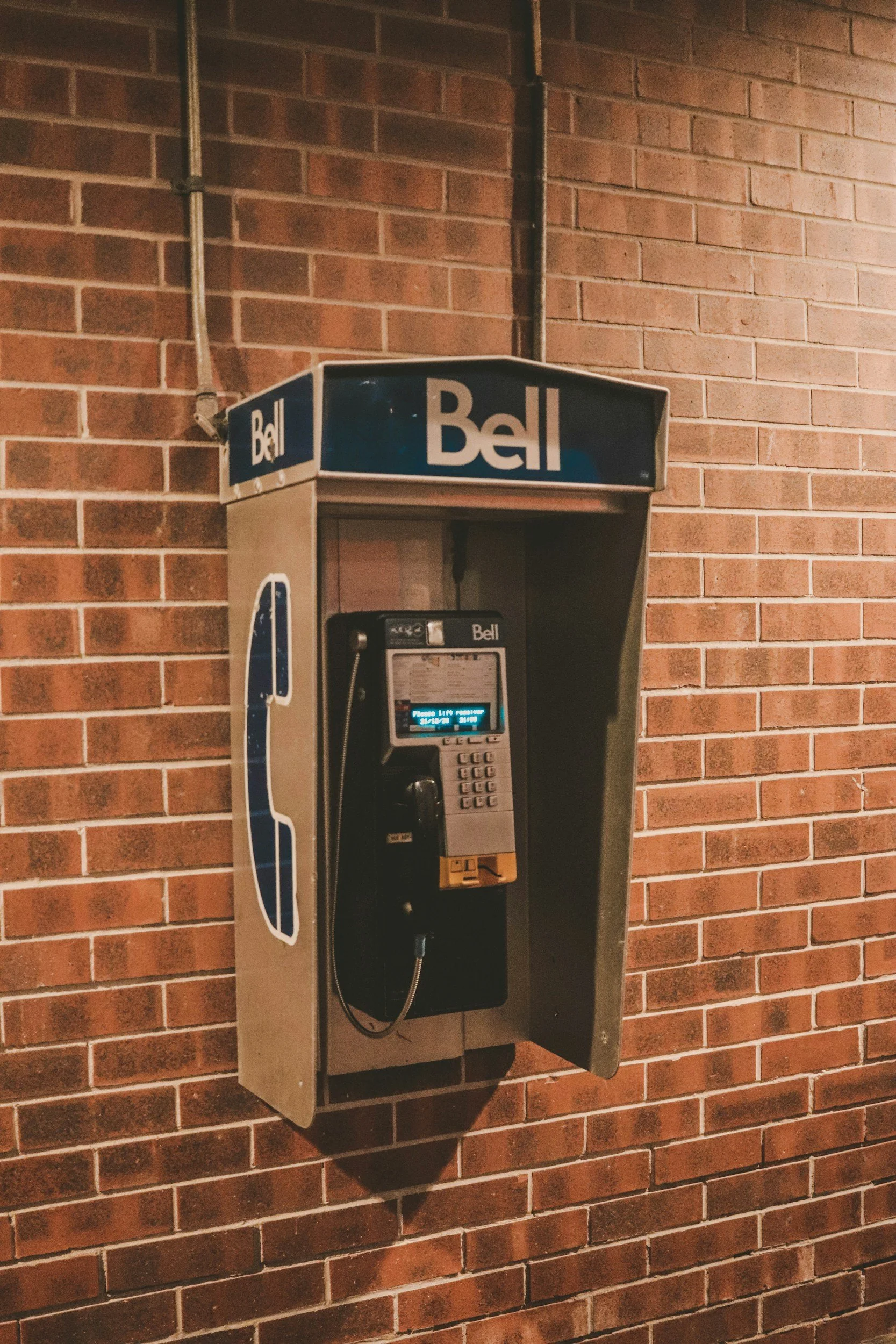
Alexander Graham Bell bears the initial credit or blame.
Dick Tracy and Steve Jobs transformed them into what we now commonly call “cell phones.”
They have become ubiquitous in modern life.
You will be hard-pressed to find someone who does not own one.
Like the legendary Tower of Babel, everyone with a cell phone has a unique language working under the guise of their personal rules for their use.
In other words, we may all be speaking English, but we do not all employ our cell phones the same way.
*
Professional Rules
I referred a friend’s sister to a therapist.
She worked with him for several weeks.
One day, she was in his office, and his cell phone rang.
He answered it, believing he had breached no professional ethics by doing so.
It was a brief “I need to call you back” response.
She fired him on the spot.
Her individual rules for cell phone use differed from his.
How dare he?
Had he known this (or bothered to find out in advance), he would not have lost a client.
*
The Spectrum
I meet several people for lunch.[1]
They all bring their cell phones.
Adam arrives first.
He is on his phone when others start arriving.
He finishes his call and places his phone on the table for quick and ready access.
Throughout our lunch, his phone rings several times.
Each time it does, he answers.
As best as I can tell, none of the calls are urgent or even important.
At one point, he leaves the table for 15 minutes to go outside and talk.
Adam has a deep connection with his cell phone.
Rumor has it that they sleep together.
When interviewed for this article, his wife did not deny it.
Adam’s phone makes him feel important, and the more calls he takes in front of others, the more important he feels – and looks.
*
Ben keeps his phone in his pocket throughout lunch.
When it rings, he pulls it out of his pocket and answers it even if he does not recognize the number.
Unlike Adam, Ben does not sleep with his phone, but he keeps it within earshot.
Ben’s wife sleeps with earplugs.
*
Carla keeps her phone in her purse.
She leaves it on vibrate.
No dirty jokes, please!
If she receives a call during lunch, she never takes it.
Carla believes that proper etiquette requires her to give her undivided attention to the people sitting with her.
She makes eye contact with everyone, even if it makes them uncomfortable.
Her house might be burning down; ICE could be picking up her twelve-year-old child from school because his skin is a little too brown and he cannot produce “his papers;” an ambulance might be on its way to the hospital because her husband just had a heart attack, but Carla is going to focus entirely on the lunch attendees and the cute waiter.
She checks her phone after lunch and returns urgent calls, leaving non-urgent calls for the indefinite future.
Her husband has never died on the way to the hospital, and she doubts he ever will.
Even if he does, she has a large insurance policy on him.
Delta does not carry a phone.
She has one at home, which she intentionally ignores as much as possible.
Leave her a message?
She rarely checks messages.
When she does, she rarely returns calls.
If she wants to connect with you, she will call you, but she has to be the one who initiates.[2]
Evelyn has “special rules.”
They are varied and complicated, but if you are going to hang with Evelyn, it is important to learn them.
One of Evelyn’s rules is that you cannot call her when she is with her girlfriends, especially during an “important event” like an estate sale or an art exhibit.
Violate them at your peril.
Evelyn will also not take calls or texts while she is in the grocery store.
You will not find out why without breaking that rule and inquiring why she is so upset.
This is especially confusing when you've been exchanging text messages for half an hour before she entered the store, only for her to suddenly stop responding.
If you drill down on the reason for her termination of communication, it has to do with social anxiety.
Apparently, grocery stores overwhelm her: too many people, too many choices, and too many narrow aisles.
If she is navigating all of that and her cell phone goes off, she flips into overwhelm.
When to expect to hear from her can be uncertain.
Text Messages
Like calls placed to cell phones, text messages also have special rules.
Fred believes that it is rude if people do not respond to his text messages within 15 minutes.
The Dude believes a month is reasonable.
Fred also believes that text messages are best used for brief communications like “on my way,” “Happy Birthday,” and “Ooops – butt dial.”
Some people will respond to text messages more readily than phone calls.
Others are just the opposite.
*
What we have here is a spectrum.
At one end of the spectrum are people like me who have lived tethered to their cell phones, day and night.[3]
As a lawyer for 45 years, I learned that if a potential client called me and I failed to answer, they were likely to call another lawyer.
In the business I was in (family law), missing that call could mean missing out on a six-figure fee (and many times, a two-figure fee was welcome).
Old habits die hard.
Now that I am retired from the practice of law, I still take my phone with me wherever I go.
People still contact me with issues and value quick responses.
At the other end of the spectrum are the phone haters.
Phone haters see cell phones as electronic leashes or ankle bracelets for prisoners out on bail.
They feel like someone (“Big Brother”?) is trying to control them.
Communicating with them by phone can be problematic.
Try email?
It’s dubious that it will improve the situation.
Between the phone-lovers and the phone-haters is a mixed bag of people who have created their own rules.
There is an old saying: You never realize where people’s boundaries are until you cross them.
Advance Warnings
A final word on the importance of warnings:
If the therapist in my first example had told his client that he was expecting an important call and asked her to please excuse a brief interruption, he would probably still have that client.
If our grocery store friend told an expected caller that she was going to be offline for the next 30-60 minutes so she could get in and out of the dreaded grocery store as quickly as possible, that probably would have preempted any discussion about, “Where did you go? We were texting, and you abruptly stopped without explanation. I wondered if you had been mugged.”
*
More
It gets more complicated than that.
How we use our cell phones is one level of the matrix.
I'll set aside what we say and how we say it for another day, along with the idea that idiosyncratic phone protocol might indicate a codependent personality (I am convinced it does. ChatGPT agrees).
If you are new to the concept of codependency, you may wish to review my article from 2016, “The Codependent Negotiator.”
https://www.tnoblelaw.com/mediation-and-negotiation
*
Have we become a modern-day Tower of Babel?
Does it matter?
Does smooth and stress-free communication have value?
Does understanding one another better have value?
How would you describe your cell-phone language?
What are your idiosyncrasies?
[1] Each of the characters described below is based on a real person. Their names have been changed to protect the innocent.
[2] An indicator of a codependent personality.
[3] But I don’t take my phone out and leave it on the table during lunch. As I see it, that’s why God made pockets. And I only take calls when I am with other people if I deem the call urgent.